
 Fruits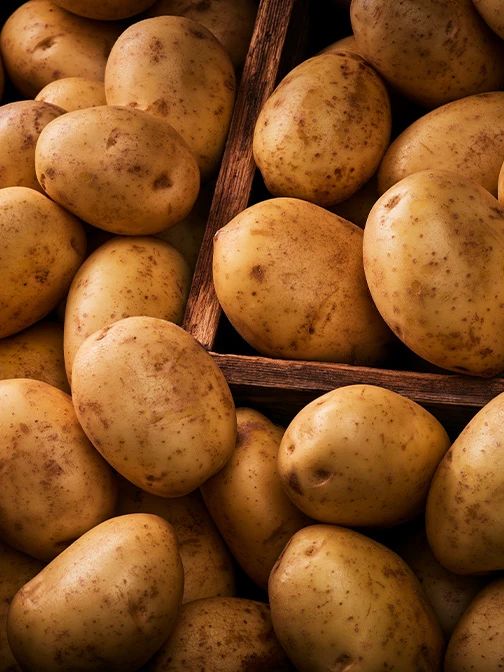
In global agriculture, some crops attract attention because of emerging consumer trends or new market opportunities. Others remain important for a more fundamental reason: they are deeply embedded in the world’s food system.
Potatoes belong to the second category.
As one of the world’s most widely consumed staple foods, potatoes play an important role not only in nutrition, but also in rural livelihoods, agricultural value chains, processing industries, logistics, and international trade.
Their importance makes the long term resilience of potato production a broader food security issue, particularly as growers face increasing pressure from climate variability, water availability, disease, input costs, and changing market conditions.
More Than a Staple Crop
According to the material provided, potatoes are the world’s third most important food crop for human consumption after rice and wheat. More than one billion people consume potatoes, while global production exceeds 300 million tonnes.
That scale gives the crop significance far beyond individual farms or producing countries.
Potatoes contribute to food availability while supporting economic activity across farming communities, processing operations, storage facilities, transportation networks, retail channels, and food service industries.
The strength of the potato sector therefore depends on an entire value chain rather than agricultural production alone.
Food Security Depends on the Whole Supply Chain
A potato may begin in the field, but maintaining a reliable supply requires coordination across multiple stages.
The value chain extends from breeding and seed production through cultivation, harvesting, storage, processing, transportation, retail, and ultimately consumption.
Weakness at any stage can influence the performance of the wider system.
For this reason, food security cannot be understood only through the amount of crop produced. Storage efficiency, disease management, transportation, resource availability, and market coordination all influence how effectively agricultural production becomes reliable food supply.
Climate Volatility Is Raising the Stakes
Potato production is closely connected to environmental conditions.
Growers are increasingly managing changing weather patterns alongside water availability, disease pressure, input costs, storage performance, and market volatility.
As climate conditions become less predictable, effective crop management becomes more important.
The challenge is not simply protecting yield during one difficult season. It is developing production systems capable of performing consistently as growing conditions evolve over time.
This makes climate resilience a strategic agricultural priority rather than a temporary response to extreme weather.
Water, Storage and Disease Management Matter Beyond Harvest
Agricultural performance does not end when potatoes leave the field.
Storage efficiency plays an important role in protecting usable production after harvest, while crop health and disease management influence both immediate yields and longer term production stability.
Water availability is equally critical.
As agricultural systems face increasing resource pressure, improving water use efficiency can contribute to the long term sustainability of potato production.
Together, these factors demonstrate an important principle: food security depends not only on producing enough, but on protecting what is produced throughout the system.
Genetic Diversity Supports Future Resilience
One of the sector’s most important long term resources lies in genetic diversity.
The source material, citing the International Potato Center, notes the conservation of more than 4,000 native potato varieties, primarily from the Andes, alongside more than 180 wild potato species containing characteristics associated with disease resistance and environmental adaptation.
This diversity provides valuable resources for breeding programs seeking to respond to future production challenges.
As environmental conditions change, crop development can help support characteristics such as resilience, disease resistance, storage performance, and adaptation to different production environments.
Innovation in genetics therefore becomes part of a much wider strategy for protecting future supply.
A Crop Supporting Entire Agricultural Economies
The importance of potatoes also extends into livelihoods.
The material highlights the FAO theme for the 2026 International Day of Potato: “Where potatoes grow, livelihoods flourish.” The message reflects the economic ecosystem surrounding the crop, including farming, agribusiness, processing, logistics, research, and employment throughout the supply chain.
This is particularly important when discussing food security.
A resilient food system needs productive crops, but it also needs economically sustainable growers and businesses capable of maintaining production and investment over time.
Protecting the future of a staple crop therefore means protecting both food availability and the value chains responsible for supplying it.
From Production Volume to Long Term Resilience
As consumer demand, environmental requirements, and production conditions continue to evolve, maintaining productivity alone will not be enough.
The potato sector will increasingly need to balance several priorities simultaneously: crop health, water efficiency, storage performance, production economics, resource management, and dependable market supply.
This requires long term investment in research, production practices, storage infrastructure, and stronger coordination throughout the agricultural value chain.
The objective is not simply maximizing the next harvest.
It is building systems capable of supporting reliable production year after year.
Max Mark’s Perspective
At Max Mark, we believe the future of agricultural trade depends on viewing products as part of complete supply systems.
From production and quality management to Traceability, Food Safety & Compliance, Cold Chain Management, and export coordination, every stage contributes to the reliability of agricultural supply.
For essential crops such as potatoes, strengthening these systems is important not only for commercial performance, but for building more resilient agricultural value chains capable of responding to changing global conditions.
Conclusion
Potatoes remain one of the foundations of global food supply because their importance extends far beyond the crop itself.
They support nutrition, agriculture, rural livelihoods, processing, logistics, research, and trade on a global scale.
As climate and production challenges become more complex, protecting that role will require more than increasing output.
It will require resilient production, efficient resource management, innovation, and coordinated value chains capable of maintaining reliable supply over the long term.