
 Fruits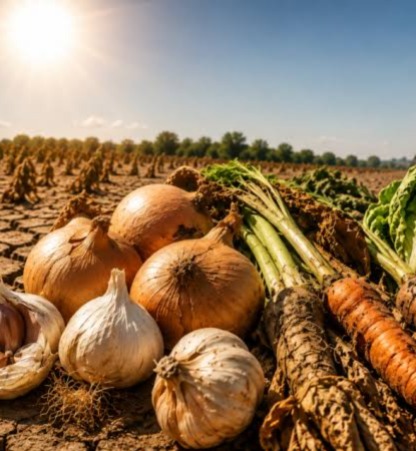
Extreme weather is becoming more than an agricultural challenge for Europe. It is increasingly influencing how fresh produce is grown, sourced, priced, and supplied across the continent.
Periods of unusually high temperatures can affect crop development, increase irrigation requirements, shorten harvesting windows, and create greater uncertainty around both yield and quality. For European buyers, this introduces a broader question: how can supply programs remain stable when domestic production becomes increasingly exposed to climate volatility?
The answer may require looking beyond traditional sourcing structures.
Climate Pressure Is Becoming a Supply Chain Issue
Fresh produce is particularly exposed to weather conditions because disruptions at farm level quickly move through the rest of the supply chain.
Extreme heat can influence crop development and marketable yield, while water stress places additional pressure on growers and production costs. Harvesting itself may also become more difficult as working hours are adjusted around extreme temperatures.
The result is not simply lower production.
It can mean greater variability in volumes, specifications, availability, and timing, exactly the factors that retailers, distributors, and food service operators depend on when planning their supply programs.
This makes climate resilience increasingly relevant to procurement strategy.
Europe’s Production Landscape Is Under Pressure
The challenge extends beyond individual heat events.
European agriculture is operating within a changing environment shaped by climate volatility, water availability, production costs, regulatory requirements, and changing cultivation patterns.
Recent European production trends have also shown declines across several traditional open field vegetables, although the causes differ between crops and countries.
This does not mean Europe is suddenly dependent on imported vegetables. Domestic production remains significant.
But it does mean that supply diversification can become strategically more important, particularly during periods when local production is disrupted or seasonal availability tightens.
A Strategic Opportunity for Egyptian Fresh Produce
Egypt occupies an interesting position within this changing landscape.
Its geographic proximity to Europe, established agricultural export sector, production capabilities, and seasonal windows can allow Egyptian suppliers to complement European production at specific moments in the market.
The opportunity is not simply to export more whenever European production declines.
The greater opportunity is to become part of a diversified sourcing strategy.
When buyers face uncertainty in one production region, having qualified suppliers across different origins can provide greater flexibility and reduce dependence on a single source.
For Egyptian exporters, this creates an opportunity, but also raises the standard required to capture it.
Availability Alone Is Not Enough
A supply gap may open the door, but reliability determines who walks through it.
European buyers still require strict standards around food safety, product specifications, residue compliance, traceability, documentation, and cold chain management.
That means Egyptian exporters seeking to benefit from changing European supply dynamics need more than agricultural capacity.
They need systems capable of delivering consistent specifications, managing quality from farm to destination, responding quickly to changing demand, and coordinating logistics within sometimes narrow commercial windows.
Climate volatility may create opportunities, but operational readiness converts those opportunities into sustainable business.
From Seasonal Supplier to Strategic Partner
This is where the conversation becomes more important for the long term.
Climate change could gradually reshape sourcing strategies from models based primarily on cost and seasonality toward models that place greater value on resilience and diversification.
For suppliers, that changes the competitive equation.
The strongest position may no longer belong simply to whoever has product available at the right moment, but to suppliers who can combine availability with consistency, compliance, flexibility, and reliable logistics.
For Egypt, this represents an opportunity to strengthen its role within European fresh produce supply chains — not necessarily as a replacement for European production, but as a complementary origin capable of supporting supply continuity when market conditions require it.
Max Mark’s Approach
At Max Mark, we view changing market conditions through the wider supply chain perspective.
Building stronger access to international markets requires combining agricultural capability with Quality Assurance, Traceability, Food Safety & Compliance, Cold Chain Management, and disciplined export operations.
As European sourcing requirements continue to evolve, our focus remains on developing the systems and relationships required to deliver consistent Egyptian fresh produce while responding to the changing needs of international buyers.
Conclusion
Europe’s climate challenges are unlikely to be defined by a single heatwave or season.
They are part of a broader shift that could influence agricultural production, sourcing decisions, and supply chain strategies for years to come.
For Egyptian agriculture, that shift creates a meaningful opportunity.
But the real competitive advantage will not come from waiting for shortages.
It will come from being ready, reliable, and strategically positioned when the market needs alternative supply.